

Nothing beats slicing into a bowl of fresh, juicy strawberries on a warm sunny day. As you enjoy your snack, your pup gives you those classic puppy-dog eyes, silently asking for a bite. It is completely natural to pause and wonder if sharing this summer treat fits safely into your canine diet.
First things first: Yes, dogs can safely eat strawberries in moderation.
While these vibrant red berries make a fantastic low-calorie treat, feeding them to your four-legged companion comes with a few essential safety rules. Let’s walk through the medical benefits, potential risks, and exact portion sizes every dog owner needs to know.
Are Strawberries Good for Dogs? (Health Benefits)

Truth be told, strawberries are packed with essential vitamins and natural compounds that support your dog’s overall wellness. They are low in calories, hydrating, and naturally sweet, making them a great alternative to processed dog treats.
Here is a breakdown of the vital nutrients inside every bite:
- Vitamin C & B-Complex: Supports a healthy immune system and assists with cell energy production.
- Fiber & Antioxidants: Promotes smooth digestion while neutralising free radicals to protect against cellular aging.
- Omega-3 Fatty Acids: Offers natural anti-inflammatory benefits to maintain a shiny coat and healthy skin condition.
- Essential Minerals: Contains potassium, magnesium, folic acid, and iodine to support daily muscle function and cellular repair.
Beyond basic nutrition, strawberries offer a few unique health perks:
- Dog Dental Care Boost: Strawberries contain malic acid, an enzyme known to naturally break down surface stains on tooth enamel. Combined with Vitamin C to fight plaque buildup, they serve as a gentle, natural freshener (though they do not replace daily tooth brushing).
- Hydration & Weight Management: With over 90% water content, strawberries provide a refreshing splash of hydration during hot weather without overloading your pet on heavy calories.
Risks to Keep in Mind Before Feeding Strawberries
Strawberries are safe, but serving them improperly can lead to unexpected health issues. Here is what to keep on your radar:
- Natural Sugar Content: Strawberries contain natural fruit sugars. While fine for healthy dogs, overfeeding can trigger blood sugar spikes, making them risky for dogs prone to obesity or managing diabetes in dogs.
- Choking Hazard & Blockages: Whole strawberries are surprisingly firm. If swallowed whole—especially by smaller breeds or eager gulpers—they present a serious choking hazard or cause an intestinal blockage.
- Leaves and Stems: The green tops are non-toxic, but they taste bitter and prove tough for a dog’s stomach to break down. Always remove them to prevent mild indigestion.
- Gastrointestinal Upset: Introduce any fruit too fast, and the extra fiber and sugar can lead to temporary loose stools, diarrhea, or gas.
- Allergies & Environmental Cross-Reactivity: Food allergies to strawberries are rare, but dogs with severe sensitivities to environmental allergens (like grass or tree pollen) can occasionally cross-react to fruits.
- Toxic Processed Options: Never feed your pet canned strawberries, strawberry syrups, jams, or strawberry ice cream. These items are loaded with extra sugars and preservatives. Worst of all, processed foods often contain artificial sweeteners like Xylitol, which causes rapid, life-threatening Xylitol toxicity in dogs.
How Many Strawberries Can Dogs Eat? (Serving Size Guide)
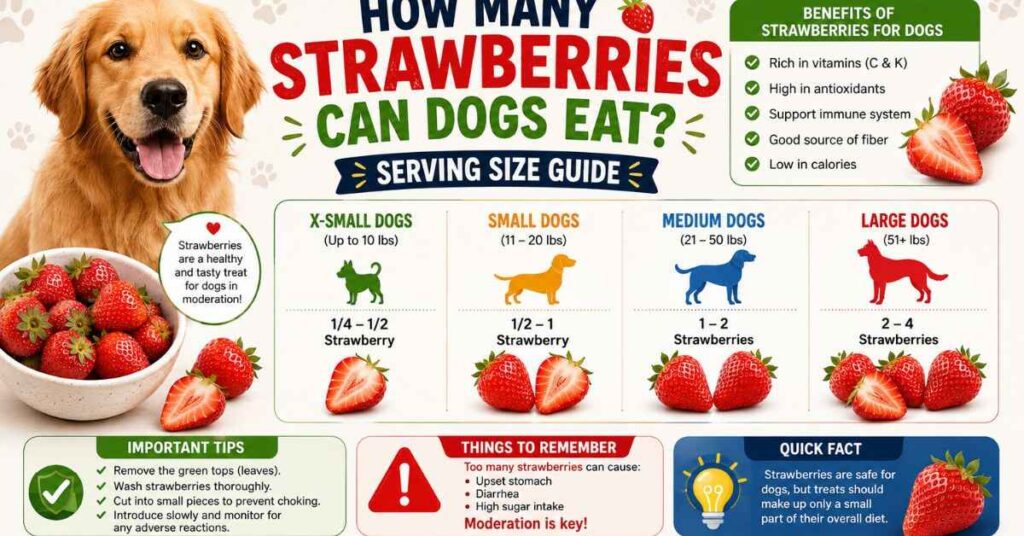
As a rule of thumb in veterinary medicine, always follow the 10 percent rule: treats should never make up more than 10% of your dog’s daily caloric intake, with the remaining 90% coming from a complete, balanced commercial dog food.
For context, one average-sized strawberry contains about 6 calories.
| Dog Size Category | Dog Weight Range | Recommended Daily Serving Size |
|---|---|---|
| Extra-Small | 2 – 20 lbs | 1–2 small slices (¼-inch thick) |
| Small | 21 – 30 lbs | 2–3 slices |
| Medium | 31 – 50 lbs | 5–6 slices |
| Large | 51 – 90 lbs | Handful of slices (approx. 3–4 sliced berries) |
| Extra-Large | 91+ lbs | Large handful of slices (approx. 4–5 sliced berries) |
How to Safely Feed Strawberries to Your Dog (Preparation & Ideas)
Preparing strawberries properly keeps your pet safe while making snack time extra fun.
Step-by-Step Preparation:
- Wash Thoroughly: Opt for organic strawberries when possible. Rinse them well under cold water to strip away dirt, pesticides, and synthetic residues.
- Remove Greens: Pluck off the green stems and leaves completely.
- Slice or Mash: Cut the fruit into bite-sized ¼-inch slices for medium-to-large dogs, or mash them for puppies and toy breeds.
Creative Serving Ideas:
- Fresh Food Topper: Toss a few chopped slices directly onto your dog’s kibble as an appetizing kibble topper to spice up dinner time.
- Frozen Treats: Freeze sliced pieces on a baking tray for a cooling summer treat. (Pro tip: Chop or mash them before freezing to keep them from turning into hard choking risks).
- Freeze-Dried Fruit: Crumbled freeze-dried fruit makes a crunchy, convenient treat. Just ensure there are no added ingredients, and always keep a fresh bowl of water nearby.
- DIY Pupsicles: Puree fresh strawberries with plain, unsweetened yogurt (xylitol-free!), pour the mixture into silicone molds, and freeze overnight for a probiotic-packed snack.
Introducing Strawberries & When to See a Vet
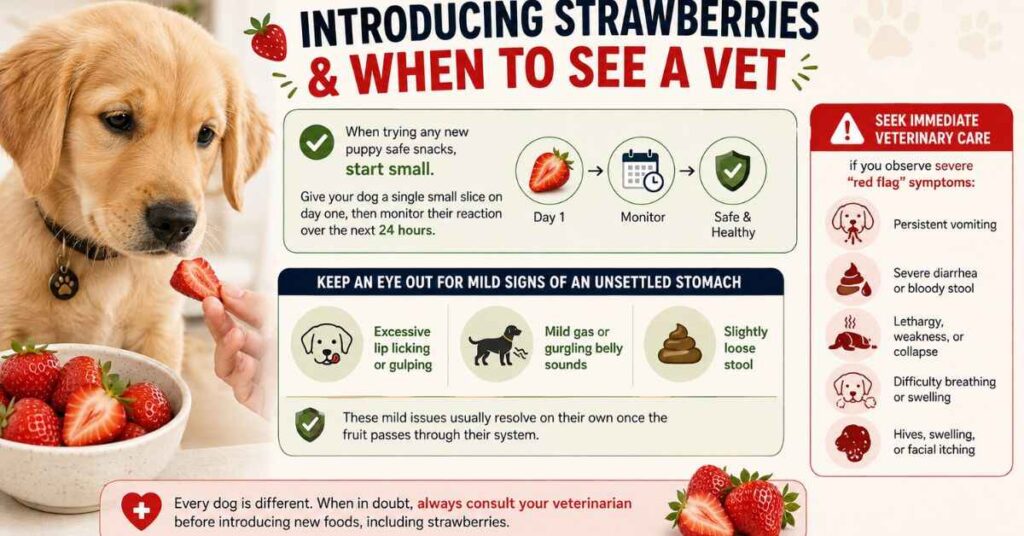
When trying any new puppy safe snacks, start small. Give your dog a single small slice on day one, then monitor their reaction over the next 24 hours.
Keep an eye out for mild signs of an unsettled stomach, such as:
- Excessive lip licking or gulping
- Mild gas or gurgling belly sounds
- Slightly loose stool
These mild issues usually resolve on their own once the fruit passes through their system. However, seek immediate veterinary care if you observe severe “red flag” symptoms:
- Persistent, violent vomiting
- Severe or bloody diarrhea
- Extreme lethargy or sudden collapse
- Signs of a severe allergic reaction (facial swelling, intense itching, or hives)
Other Safe Fruity Treats for Dogs
If your dog loves fruit, you can occasionally rotate strawberries with these other safe, dog-friendly options:
- Blueberries: Low-calorie and packed with antioxidants.
- Watermelon: Extremely hydrating (just remove all seeds and the hard rind).
- Bananas: Great source of potassium, though best served in small amounts due to natural sugar.
- Apples: Crunchy and rich in fiber (always remove the core and seeds first).
Frequently Asked Questions (FAQ)
Q1: Can dogs eat strawberry leaves and seeds?
Strawberry seeds are tiny and completely harmless for dogs to ingest. However, strawberry leaves and stems should always be removed; while non-toxic, they taste bitter and can cause mild gastrointestinal upset.
Q2: Can dogs eat strawberry jam or jelly?
No. Commercial jams and jellies contain high amounts of added sugar, artificial preservatives, and potential toxins like Xylitol. Stick strictly to fresh or frozen whole fruit.
Q3: Can strawberries whiten my dog’s teeth?
Strawberries contain malic acid, which can help break down surface stains on your dog’s teeth over time. However, it is not a replacement for routine professional dental care and daily tooth brushing.

Hi! I’m Muhammad Talha, the paw-sitive mind behind PoochHive.I’ve been a lifelong dog lover and pet enthusiast, dedicated to helping dog owners give their furry friends a happier, healthier life.On PoochHive, I share trusted tips, training guides, health advice, and product reviews — all based on research, experience, and a whole lot of love for dogs.