
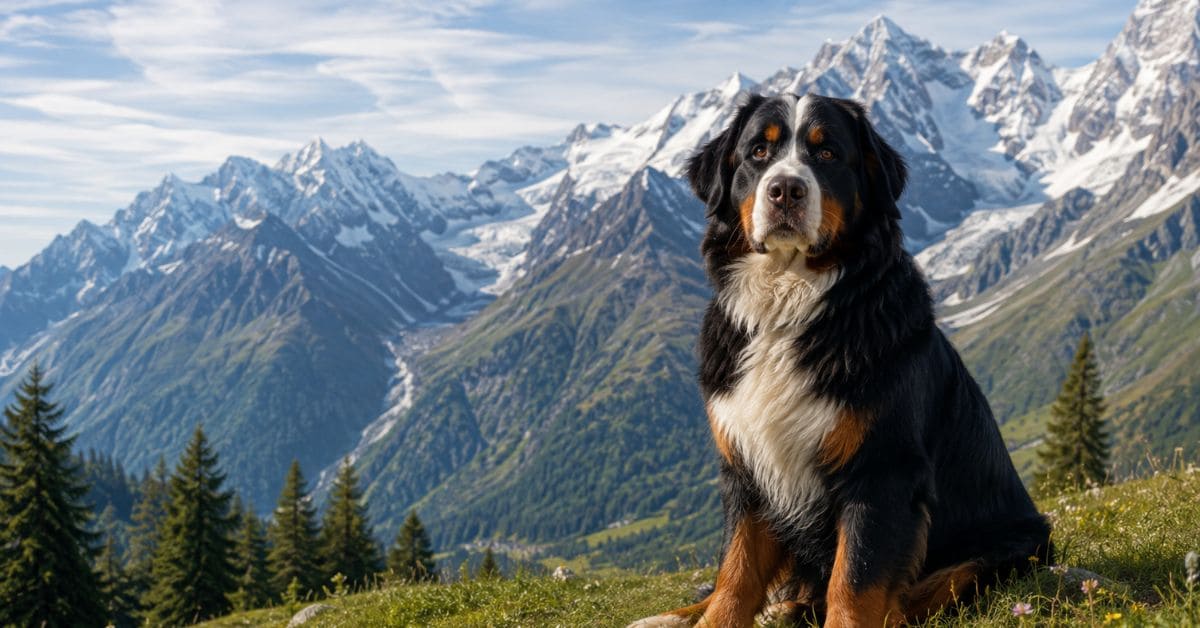
Known affectionately as the “Berner,” the Bernese Mountain Dog (Berner Sennenhund) is one of the most beloved large breeds in the world. Originating from the canton of Bern in the Swiss Alps, these gentle giants were historically bred as all-purpose farm working dogs, pulling cheese carts, guarding pastures, and herding livestock alongside alpine dairymen.
Today, these tricolor working group dogs have transitioned from rustic farm hands to cherished family companions. If you are considering bringing a Berner into your home, this comprehensive overview covers everything from temperament and exercise to grooming and breed-specific health care.
Quick Breed Overview & Vital Statistics
- AKC Breed Group: Working Group
- Other Names: Berner, Berner Sennenhund, Dürrbächler, Swiss Mountain Dog
- Average Height: Males: 25–28 inches (64–70 cm); Females: 23–26 inches (58–66 cm)
- Average Weight: Males: 86–110 lbs (39–50 kg); Females: 79–110 lbs (35–50 kg)
- Life Expectancy: 6–10 years
- Coat Type: Long, thick double coat (straight or slightly wavy)
Origin & History: From Swiss Farm Dog to Family Companion
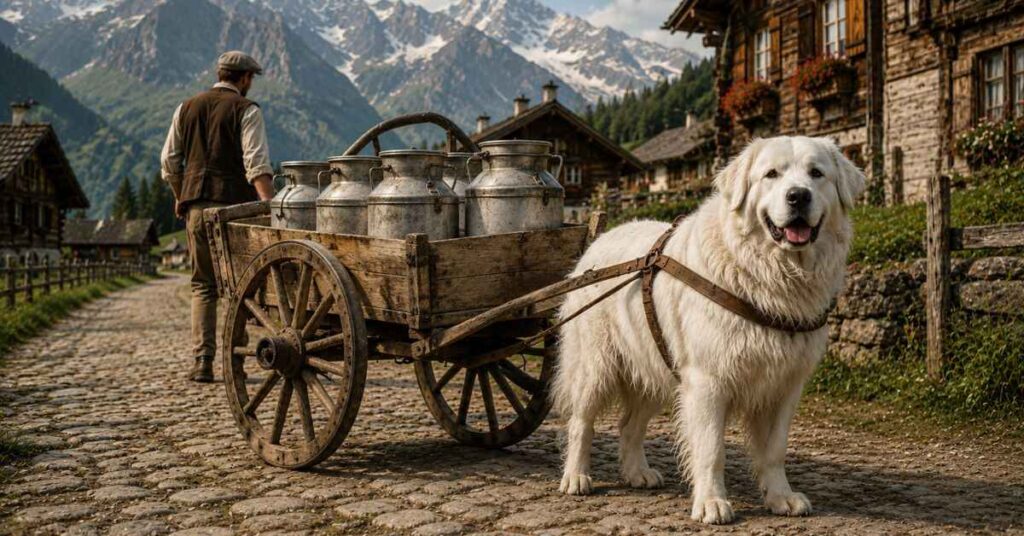
The ancestral roots of the Bernese Mountain Dog trace back over 2,000 years to Mastiff-type working dogs brought to Switzerland by Roman armies. In the rural regions surrounding Dürrbach and the Canton of Bern, farmers refined these heavy-boned dogs to handle grueling alpine tasks.
The breed evolved through several key historical stages:
- Ancient Roots: Roman Mastiffs brought to the Swiss Alps over two millennia ago.
- Working Farm Era: Developed into the Dürrbächler, serving as an all-around cart-pulling and herding dog.
- Breed Preservation: The first breed club (Schweizerischer Dürrbach-Klub) was established in Switzerland in 1907.
- Global Recognition: Officially recognized by the American Kennel Club (AKC) in 1937, rapidly evolving into a popular global household pet.
By the early 1900s, mechanization reduced the need for cart-pulling farm dogs, but dedicated breeders preserved their gentle nature and working capacity. Today, they remain iconic family dogs across Europe and North America.
Physical Characteristics & Standard Markings
The Berner is a sturdy, well-balanced large dog featuring a wide back, deep chest, and strong muscular legs built for drafting.
Distinctive Tri-Color Coat
The breed standard specifies a jet-black ground coat adorned with symmetrical rust-colored markings and crisp white highlights:
- Rust Markings: Positioned above the eyes, on the cheeks, sides of the chest, and all four legs.
- White Markings: A distinct white muzzle band, a white chest marking (often referred to as the “Swiss Cross”), and white-tipped paws and tail.
- The “Swiss Kiss”: A small white mark behind the neck, prized by many owners.
Temperament, Personality & Family Compatibility
Berners are celebrated for their calm, goofy, and endlessly patient nature. Despite their massive physical stature, they possess a sensitive “lap dog spirit” and thrive on human companionship.
Are Bernese Mountain Dogs Good with Children and Pets?
Yes. Berners are notoriously gentle with children and typically display a protective, watchful eye over young family members. They generally get along well with domestic cats and other dogs, provided they receive early socialization.
Important Note: Due to their adolescent clumsiness and heavy weight, interactions with toddlers should always be supervised to prevent accidental knock-downs. Children should never climb or ride on a Berner.
Exercise Needs & Energy Levels
While energetic, Bernese Mountain Dogs are not high-endurance runners. They require roughly 45 to 60 minutes of moderate daily exercise, split into multiple shorter walks or play sessions throughout the day.
A healthy daily routine generally includes:
- Morning: A 20 to 30-minute low-impact walk during cooler hours.
- Afternoon: Light mental games or free time in a shaded yard.
- Evening: A 20-minute gentle stroll followed by family indoor time.
Key Activity Precautions
- Heat Intolerance: Their dense double coat makes them extremely vulnerable to overheating and heatstroke. Limit outdoor exercise during hot or humid summer afternoons.
- Puppy Joint Protection: Avoid prolonged high-impact activities (like long jogs or intense agility jumps) until your Berner is fully grown at around two years old to protect their growing growth plates and joints.
Nutrition & Feeding Guidelines
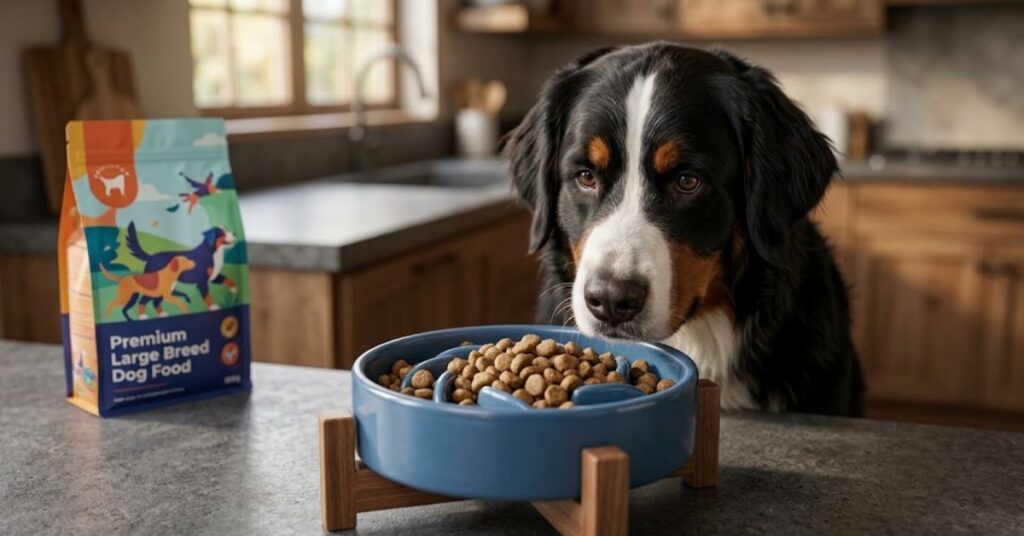
Due to their deep chests, Berners are prone to Gastric Dilatation-Volvulus (GDV or bloat), a life-threatening stomach condition.
- Daily Ration: Most adult Berners require 3 to 5 cups of high-quality, large-breed dry kibble per day, divided into two or three distinct meals.
- Prevention Strategies: Avoid feeding large single daily meals, discourage rapid eating with slow-feeder bowls, and limit strenuous activity immediately after eating.
Grooming & Coat Maintenance
The fluffy double coat sheds moderately year-round and heavily twice a year during seasonal climate shifts (spring and autumn).
| Grooming Task | Recommended Frequency | Key Focus Area |
| Coat Brushing | 2–3 times per week (Daily during shedding) | Prevents mats behind ears, under tail, and “pants” |
| Bathing | Every 6–8 weeks | Maintains coat health without stripping natural oils |
| Nail Trimming | Every 3–4 weeks | Prevents painful splitting and joint strain |
| Ear Cleaning | Weekly | Prevents moisture build-up and ear infections |
Common Health Considerations
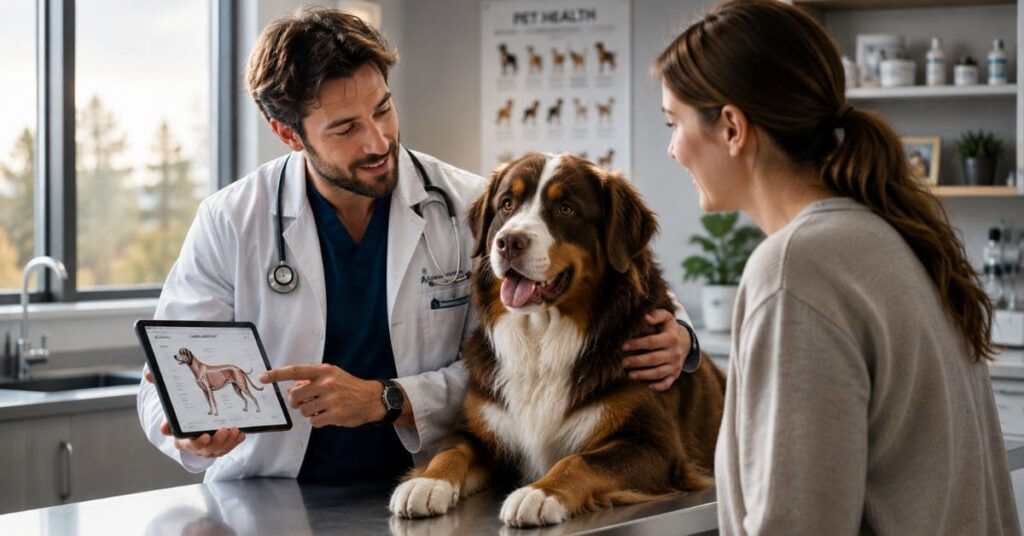
The breed suffers from a relatively short lifespan (averaging 6 to 10 years) and specific genetic vulnerabilities. Prospective owners should be aware of:
- Oncology Risks: Berners have high rates of neoplasia, particularly Histiocytic Sarcoma and Mast Cell Tumors.
- Orthopedic Issues: Early-onset Hip Dysplasia, Elbow Dysplasia, and Arthritis.
- Organ & Neurological Conditions: Glomerulonephritis (kidney disease) and Degenerative Myelopathy.
Working with reputable, health-tested breeders who conduct genetic screenings for joint dysplasia and eye conditions is essential to promoting a long, healthy life.
Final Summary: Is a Berner Right for You?
The Bernese Mountain Dog is best suited for families with adequate home space, secure shaded yards, and the time required to manage daily shedding and companionship needs. If you can provide gentle training, a cool environment, and plenty of love, a Berner will repay you with unwavering loyalty and affection.

Hi! I’m Muhammad Talha, the paw-sitive mind behind PoochHive.I’ve been a lifelong dog lover and pet enthusiast, dedicated to helping dog owners give their furry friends a happier, healthier life.On PoochHive, I share trusted tips, training guides, health advice, and product reviews — all based on research, experience, and a whole lot of love for dogs.