
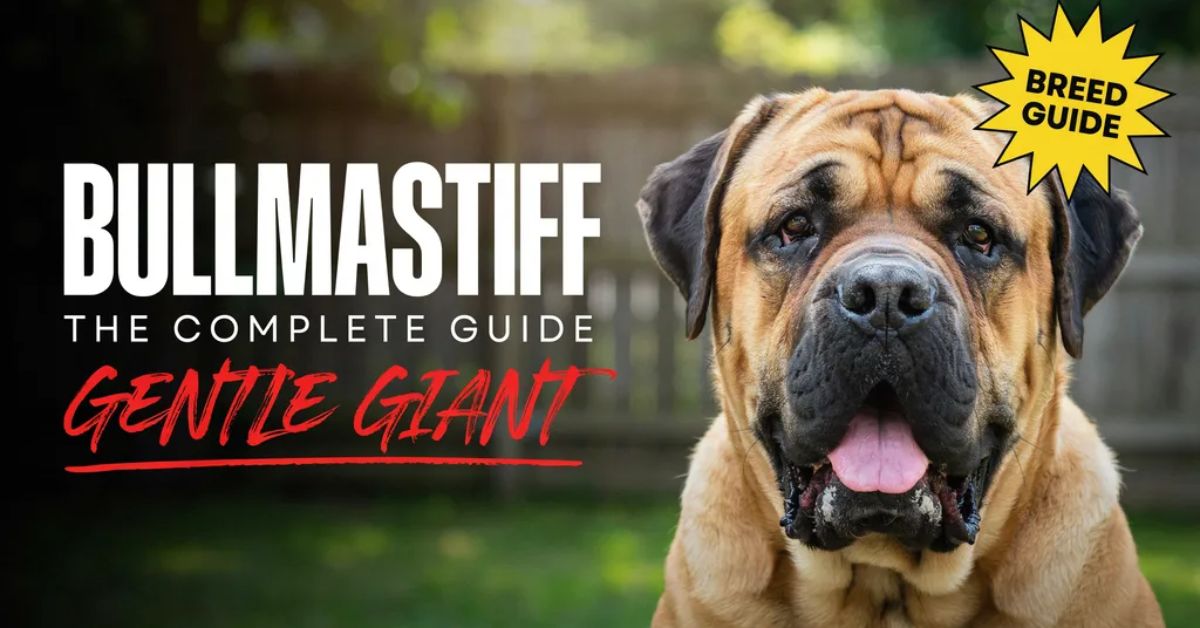
Picture a dog powerful enough to stop a poacher in his tracks, yet gentle enough to rest his massive head on a toddler’s lap without a second thought.
That contradiction is exactly what makes the Bullmastiff so fascinating.
This is a breed built on opposites. Fearless but calm. Enormous but surprisingly graceful. Protective but deeply affectionate with the people it loves.
If you are considering bringing a Bullmastiff into your home, or you already share your life with one, understanding this breed’s temperament, physical needs, and history will help you care for them better.
In this guide, we will walk through everything you need to know about the Bullmastiff dog breed. This includes their traits, appearance, general care needs, and the surprisingly practical origin story behind this loyal companion.
Whether you have already fallen in love with the breed or you are still researching the Bullmastiff dog breed before bringing one home, this article covers the details that matter most for everyday ownership.
Breed Traits and Characteristics
The Bullmastiff is a large, muscular working breed known for its quiet confidence and steady nature.
Unlike some guard breeds that are constantly alert or reactive, Bullmastiffs tend to carry themselves with a calm, almost dignified presence. They are watchful, but not anxious.
Temperament
Bullmastiff temperament is often described as a blend of courage and gentleness.
At home, these dogs are typically affectionate, loyal, and deeply bonded to their families. Many owners describe their Bullmastiff as a “gentle giant” who enjoys leaning against family members or following them from room to room.
Outside the home, or around strangers, Bullmastiffs can be more reserved and watchful. This is a natural trait rooted in their original job as estate guardians, which we will cover in more detail later in this article.
Because of their protective instincts, early socialization is important. Introducing a Bullmastiff puppy to different people, environments, and situations helps them grow into a well-adjusted adult dog who can tell the difference between normal daily life and an actual concern.
According to the American Kennel Club, the Bullmastiff was specifically developed to be fearless at work while remaining docile at home, which explains this balance of protectiveness and affection that owners see today.
Bullmastiffs are also known for being relatively low energy compared to other working breeds. They enjoy moderate exercise, but they are just as happy relaxing on the couch once their needs are met.
Bullmastiff Size and Weight

Bullmastiffs are classified as a giant breed, and their size is one of the first things people notice.
Adult males typically stand between 25 and 27 inches tall at the shoulder and weigh between 110 and 130 pounds.
Females are somewhat smaller, usually standing between 24 and 26 inches tall and weighing between 100 and 120 pounds.
Despite their bulk, Bullmastiffs are surprisingly agile. Their body structure was originally designed for speed and strength in short bursts, which made them highly effective at their original job of pursuing intruders.
Because of their size, Bullmastiff puppies grow quickly, and it is worth being mindful of their nutrition and joint health during this rapid growth phase. Speaking with a veterinarian about appropriate large breed puppy food can help support healthy bone and joint development.
Bullmastiff Lifespan

The average Bullmastiff lifespan ranges from 7 to 9 years.
This is shorter than many smaller dog breeds, which is common among giant breeds in general. Larger dogs tend to age faster and are more prone to certain health conditions, including hip and elbow dysplasia, certain heart conditions, and some cancers.
Regular veterinary checkups, a balanced diet, and maintaining a healthy body weight can all play a role in supporting a Bullmastiff’s quality of life throughout their years. Hill’s Pet notes that nutrition tailored to large and giant breeds is one of the most effective ways to support long term joint and heart health in dogs of this size.
Practical Takeaways for Owners

A few actionable points to keep in mind if you own or are considering a Bullmastiff:
Provide consistent, positive socialization starting in puppyhood.
Stick to moderate exercise rather than high intensity activity, especially in hot weather, since this breed can be prone to overheating.
Monitor growth carefully during the puppy stage to support healthy joint development.
Schedule regular veterinary visits to catch any breed related health concerns early.
Breed Colors and Markings
Bullmastiffs have a short, dense coat that is both low maintenance and functional, offering some protection from the outdoors while requiring minimal grooming.
The breed standard recognizes three main coat colors.
Fawn is a light tan or golden color and is one of the most commonly seen shades.
Red ranges from a reddish tan to a deeper copper tone.
Brindle features a striping pattern layered over a fawn or red base coat, giving the dog a tiger like appearance.
The Black Mask
Regardless of coat color, most Bullmastiffs have a black mask around the muzzle. This darker shading typically extends up around the eyes, giving the breed its distinctive, serious expression.
Small white markings are sometimes seen on the chest, but excessive white patterning is generally considered outside the standard for the breed.
Grooming Needs
Thanks to their short coat, Bullmastiffs are relatively easy to groom. A weekly brushing session is usually enough to manage shedding and keep their coat healthy.
Because Bullmastiffs have facial wrinkles, it is helpful to regularly clean and dry the skin folds around their face to prevent irritation or infection.
About the Breed
Understanding the Bullmastiff dog breed means understanding the balance between their working heritage and their role as a modern day companion.
Personality in the Home
Inside the household, Bullmastiffs are known for being loving, loyal, and surprisingly good with children when properly socialized. Their calm demeanor often makes them well suited to family life.
That said, their size means supervision is important, especially with very young children, simply because an enthusiastic Bullmastiff can accidentally knock over a small child during play.
Training Considerations
Bullmastiffs are intelligent, but they can also be independent thinkers. This means training works best when it is consistent, positive, and started early.
Harsh training methods tend to be less effective with this breed. Bullmastiffs generally respond better to reward based training that builds trust rather than fear.
Because of their strength, basic obedience training such as leash manners and recall commands is particularly important. A well trained Bullmastiff is a joy to live with, while an undertrained one can be genuinely difficult to manage simply due to their size and strength.
Living Situation
Bullmastiffs can adapt well to various living situations, including homes with moderate sized yards. However, due to their size, apartment living is possible but less ideal unless the owner is committed to regular exercise and mental stimulation.
They do best in a home where they are considered part of the family rather than an outdoor only dog, as Bullmastiffs form strong attachments to their people and can develop separation related stress if left isolated for long periods.
Health Considerations
Like many giant breeds, Bullmastiffs can be prone to certain health conditions. These may include hip and elbow dysplasia, certain heart conditions, and a higher risk of bloat, a serious digestive condition that requires immediate veterinary attention.
Working with a veterinarian familiar with large and giant breeds, along with maintaining a healthy diet and weight, can help manage many of these risks proactively.
The Origins of the Bullmastiff Dog Breed
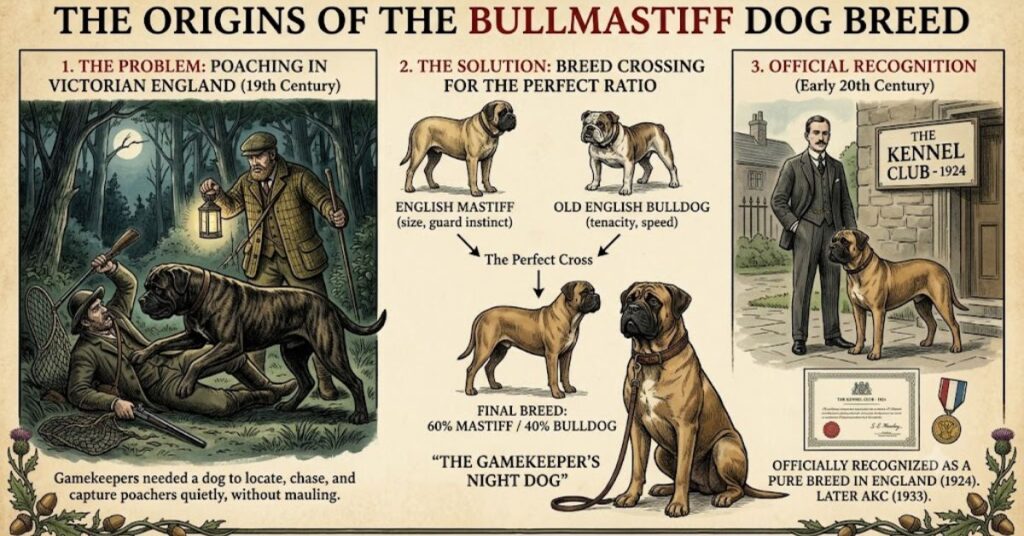
The Bullmastiff’s history is rooted in a very practical problem faced by English gamekeepers during the 1800s.
At the time, large estates in England were frequently targeted by poachers, and gamekeepers needed a dog capable of confronting and holding an intruder without causing severe injury or worse, since the goal was to detain the poacher until the gamekeeper arrived.
Bullmastiff vs Mastiff
To create a suitable working dog, breeders combined the size and strength of the Mastiff with the speed and tenacity of the Bulldog. The result was a dog with roughly 60 percent Mastiff and 40 percent Bulldog heritage.
This is one of the most important distinctions when comparing Bullmastiff vs Mastiff breeds. While both are large, powerful dogs, the Mastiff tends to be even larger and generally calmer, while the Bullmastiff carries more of the Bulldog’s agility and quickness, traits that were essential for chasing down poachers on foot.
English Mastiff vs Bullmastiff
When comparing English Mastiff vs Bullmastiff more specifically, size is usually the most noticeable difference. English Mastiffs are typically larger and heavier than Bullmastiffs, sometimes weighing well over 150 pounds.
Temperament also differs slightly. English Mastiffs are often described as even more laid back, while Bullmastiffs tend to retain a bit more of the alertness and drive inherited from their Bulldog ancestry.
Recognition as a Breed
The Bullmastiff was officially recognized as a distinct breed by the English Kennel Club in 1924, cementing their place as a working breed with a clear and practical purpose.
Today, while very few Bullmastiffs work as estate guardians in the traditional sense, their protective instincts and loyal nature remain deeply rooted in their history. This working past is part of what makes the Bullmastiff dog breed such a devoted and reliable family companion today.
Frequently Asked Questions
Are Bullmastiffs good family dogs?
Yes, Bullmastiffs are generally excellent family dogs. They are affectionate, loyal, and known for being gentle with children when properly socialized from puppyhood. Their calm indoor temperament makes them well suited to home life, though their large size means playtime with small children should always be supervised.
How big does a Bullmastiff get?
Adult male Bullmastiffs typically stand 25 to 27 inches tall and weigh between 110 and 130 pounds. Females are slightly smaller, usually standing 24 to 26 inches tall and weighing between 100 and 120 pounds.
What is the average Bullmastiff lifespan?
The average Bullmastiff lifespan is between 7 and 9 years. As with most giant breeds, regular veterinary care, a balanced diet, and healthy weight management can help support a longer, healthier life.
What is the difference between a Bullmastiff and a Mastiff?
The main difference is size and temperament. Mastiffs are generally larger and calmer, while Bullmastiffs are slightly smaller and carry more agility and alertness, traits inherited from their Bulldog ancestry. Bullmastiffs were originally bred to be fast enough to catch and hold intruders, while Mastiffs were bred primarily for size and presence.
Do Bullmastiffs bark a lot?
No, Bullmastiffs are not known for excessive barking. They tend to be quiet, watchful dogs that rely on their physical presence rather than vocalizing to deter intruders. This makes them relatively low noise companions compared to many other guard breeds.
Final Thoughts
The Bullmastiff is a breed that carries its working history with quiet pride.
Bred to be brave enough to face down a poacher, yet gentle enough to be trusted around family, this breed continues to offer a unique combination of protection and affection.
If you are considering adding a Bullmastiff to your family, understanding their size, temperament, and health needs will help you provide the kind of care that lets this gentle giant truly thrive.
Whether you already share your home with a Bullmastiff or are simply researching the breed, one thing is clear. Few dogs manage to be so imposing and so devoted at the same time.

Hi! I’m Muhammad Talha, the paw-sitive mind behind PoochHive.I’ve been a lifelong dog lover and pet enthusiast, dedicated to helping dog owners give their furry friends a happier, healthier life.On PoochHive, I share trusted tips, training guides, health advice, and product reviews — all based on research, experience, and a whole lot of love for dogs.