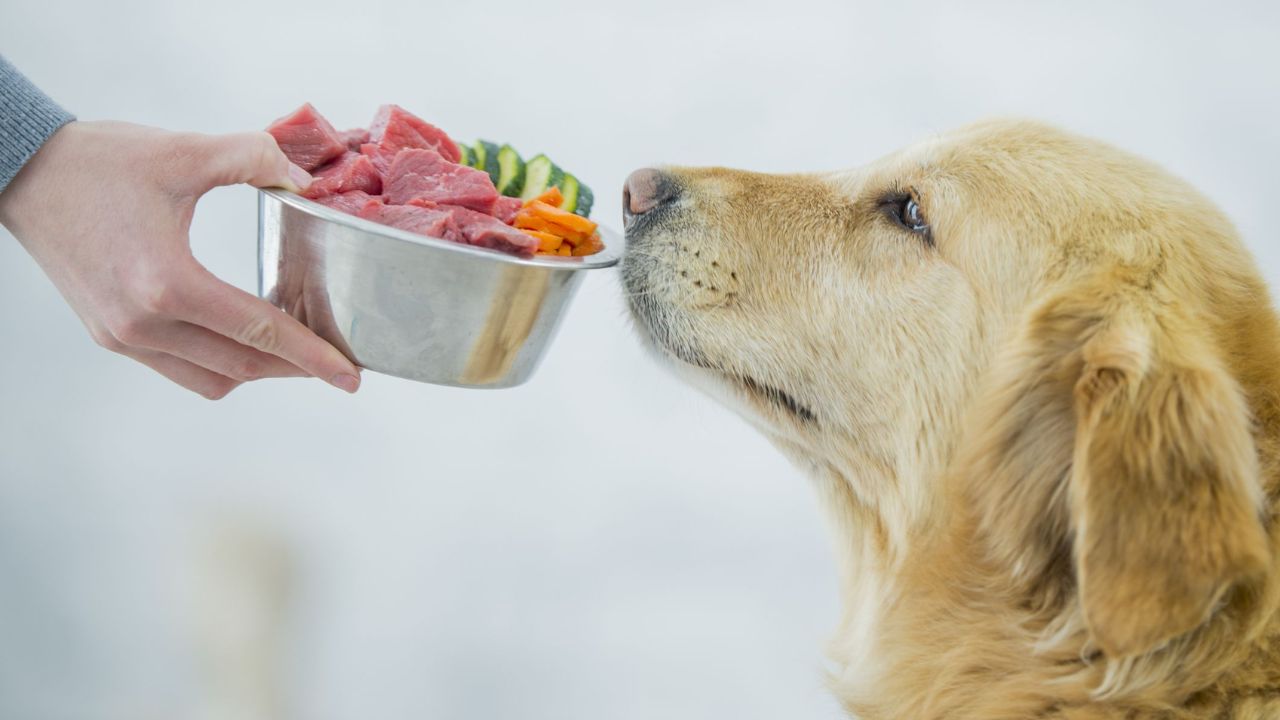
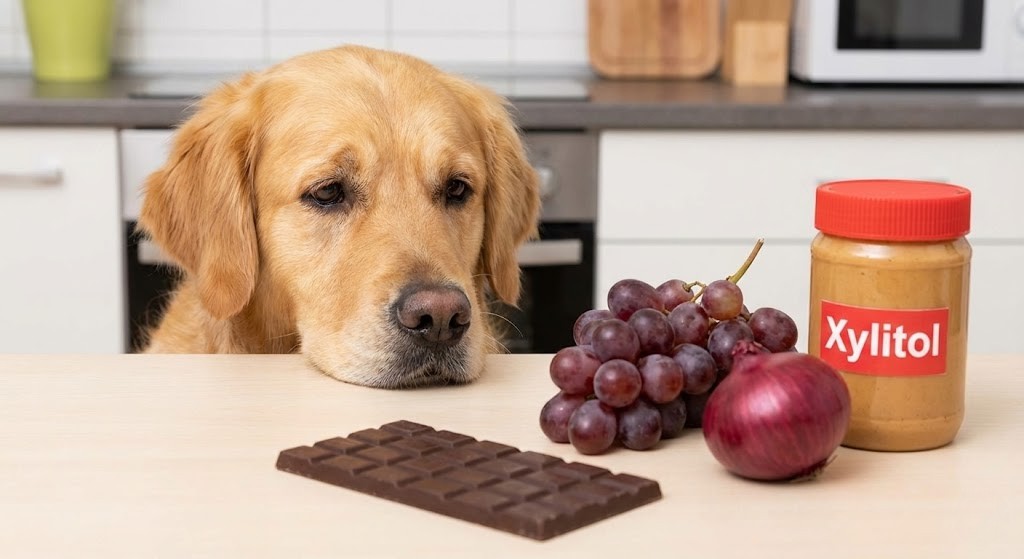
Every dog owner knows the look. You are eating dinner, and suddenly a pair of big, soulful puppy eyes appears, begging for just one tiny bite. It is incredibly tempting to give in and share your food with your furry best friend.
While many human foods are safe and even healthy as occasional treats, others are downright dangerous. Some common kitchen staples can cause serious health issues in dogs ranging from an upset stomach to fatal organ failure.
Knowing which foods are poisonous for dogs is essential for every pet parent. In this guide we will cover 10 common human foods that are toxic to dogs and why you must keep them out of reach.
Here is the table of toxic foods:
| Toxic Food | Why It’s Dangerous | Risk Level |
|---|---|---|
| 🍫 Chocolate | Heart problems, seizures | HIGH |
| 🍬 Xylitol (Gum) | Liver failure, hypoglycemia | CRITICAL |
| 🍇 Grapes/Raisins | Kidney failure | HIGH |
| 🧅 Onions/Garlic | Anemia (blood cell damage) | MODERATE |
| 🥜 Macadamia Nuts | Nerve damage, tremors | MODERATE |
| 🍺 Alcohol | Coma, death | HIGH |
| 🥑 Avocado | Vomiting, choking hazard | MILD |
| ☕ Caffeine | Heart palpitations | MODERATE |
| 🍞 Yeast Dough | Stomach bloating/twisting | HIGH |
| 🍖 Cooked Bones | Internal Punctures | HIGH |
1. Chocolate
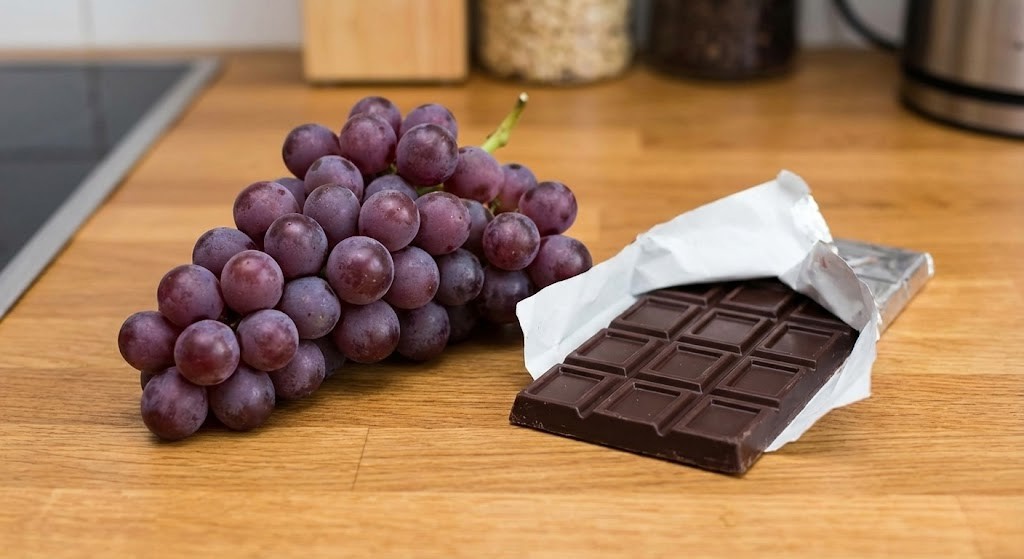
Most people know chocolate is bad for dogs, but few realize how dangerous it actually is. Chocolate contains theobromine and caffeine, both stimulants that dogs cannot metabolize effectively.
Why it’s toxic: The darker and more bitter the chocolate, the more dangerous it is. Baking chocolate and dark chocolate are far more toxic than milk chocolate. Symptoms: Vomiting, diarrhea, increased thirst, panting, racing heart rate, and in severe cases, seizures.
2. Xylitol (Artificial Sweetener)
This is perhaps the most frightening item on the list because it is hidden in so many “sugarfree” products. Xylitol is commonly found in sugarfree gum, candies, baked goods, and crucially, some peanut butters.
Why it’s toxic: Even small amounts of xylitol can cause a massive, sudden release of insulin in dogs, leading to dangerous hypoglycemia (low blood sugar). High doses can cause total liver failure. Symptoms: Vomiting, loss of coordination, lethargy, and seizures. Symptoms can appear within 30 minutes. > Pro Tip: Always check the label on your peanut butter jar before using it to fill a Kong toy to ensure it contains NO Xylitol.
3. Grapes and Raisins
It is shocking to many dog owners that a healthy fruit like a grape can be deadly.
Why it’s toxic: The exact substance within grapes and raisins that causes toxicity is still unknown to veterinarians, but the result is clear: they can cause sudden, acute kidney failure. Some dogs can eat several without issue, while just a handful can be fatal to others. It is never worth the risk. Symptoms: Vomiting and hyperactivity initially, followed by lethargy and a lack of appetite within 24 hours as kidneys begin to fail.
4. Onions, Garlic, and Chives
These ingredients are staples in almost every savory human meal, making them a frequent source of accidental poisoning. They are toxic whether raw, cooked, or powdered (like onion powder).
Why it’s toxic: These plants contain compounds that damage a dog’s red blood cells, leading to hemolytic anemia. Cats are even more sensitive, but dogs are highly susceptible too. Symptoms: Pale gums, lethargy, weakness, and dark/reddish urine. Symptoms may take a few days to appear after ingestion.
5. Macadamia Nuts
Often found in cookies and trail mixes, these nuts are uniquely toxic to dogs.
Why it’s toxic: Like grapes, the exact mechanism isn’t fully understood, but macadamia nuts affect nerve function. Symptoms: Weakness in the back legs, vomiting, tremors, and hyperthermia (high body temperature). Symptoms usually appear within 12 hours.
6. Alcohol
Under no circumstances should a dog be given alcohol. Because dogs are much smaller than humans, it takes very little alcohol to cause severe poisoning.
Why it’s toxic: It depresses the central nervous system. Symptoms: Vomiting, decreased coordination, difficulty breathing, coma, and potentially death.
7. Avocado
While super healthy for humans, avocados contain a fungicidal toxin called persin.
Why it’s toxic: Persin is present in the fruit, pit, leaves, and plant. While many dogs only experience mild stomach upset from the flesh, the large pit also poses a major choking and obstruction hazard. Symptoms: Vomiting and diarrhea.
8. Caffeine (Coffee, Tea, Energy Drinks)
Dogs are much more sensitive to the effects of caffeine than humans are.
Why it’s toxic: Caffeine is a stimulant similar to the chemicals found in chocolate. Symptoms: Restlessness, rapid breathing, heart palpitations, muscle tremors, and fits.

9. Yeast Dough
If you are baking bread, never let your dog steal a piece of raw dough left to rise.
Why it’s toxic: Two things happen in the dog’s warm stomach: First, the dough continues to rise, expanding and causing severe bloating and pain. Second, the fermenting yeast produces alcohol, which can lead to alcohol poisoning. Symptoms: severe abdominal distension (bloated stomach), unproductive retching, and disorientation.
10. Cooked Bones
Wait, aren’t dogs supposed to eat bones? Only raw, recreational bones are generally safe.
Why it’s dangerous: Cooked bones (from chicken wings, steak leftovers, or ribs) become brittle and dry. When chewed, they splinter into sharp shards. These shards can puncture the gums, throat, stomach, or intestines, leading to life threatening internal bleeding or blockages requiring emergency surgery.
What to Do If Your Dog Eats Something Toxic
If you suspect your dog has eaten any of the human foods listed above time is critical.
- Do not panic but act fast.
- Try to determine how much they ate and how long ago it happened.
- Call your veterinarian immediately. If it is after hours call an emergency vet clinic or a pet poison helpline (such as the ASPCA Animal Poison Control Center).
- Do NOT induce vomiting unless specifically instructed to do so by a professional. Some substances can cause more damage coming back up.
Keeping your kitchen secure and resisting those begging eyes is the best way to keep your pooch safe and healthy.

ARCA PET Pet First Aid Kit (100 Pieces)
When kitchen accidents happen, time is critical. This vet-approved kit contains everything you need to stabilize your pet while contacting the vet.
- 100 Essential Items: Includes bandages, scissors, and antiseptic wipes.
- Digital Thermometer: Vital for detecting fevers caused by toxins like Macadamia nuts.
- Travel Friendly: Compact design perfect for home, hiking, or the car.
FAQS:
Why is chocolate toxic to dogs?
Chocolate contains theobromine and caffeine, stimulants that dogs cannot metabolize effectively. Dark and baking chocolates are the most dangerous. Symptoms include vomiting, increased heart rate, and potential seizures.
Are grapes and raisins safe for dogs?
No, grapes and raisins are highly toxic and can cause sudden, acute kidney failure in dogs. Even a small handful can be fatal to some dogs, so they should be avoided completely.
What foods contain Xylitol that dogs should avoid?
Xylitol is an artificial sweetener often found in sugar-free gum, candy, baked goods, and some brands of peanut butter. It causes a massive insulin release in dogs, leading to dangerous hypoglycemia and liver failure.
What should I do if my dog eats something toxic?
If your dog eats a toxic food, act immediately. Try to determine how much they ate, and call your veterinarian or an emergency pet poison helpline right away. Do not induce vomiting unless a professional instructs you to do so.

Hi! I’m Muhammad Talha, the paw-sitive mind behind PoochHive.I’ve been a lifelong dog lover and pet enthusiast, dedicated to helping dog owners give their furry friends a happier, healthier life.On PoochHive, I share trusted tips, training guides, health advice, and product reviews — all based on research, experience, and a whole lot of love for dogs.